

Get more calls, more quote requests, and more booked jobs from your website.





When a driver hears a strange noise on the way to work, or their check engine light comes on the morning of a road trip, they don't flip through a phone book. They search Google. And within seconds, they're comparing auto repair shops, reading reviews, and deciding who's going to touch their car.
If your shop doesn't have a professional website—or has one that's outdated, slow, or hard to navigate—you're handing those customers to the shop down the street.
This guide breaks down why a professional website is essential for auto repair shops, what makes one effective, and how to build one that drives more calls, more estimates, and more repeat business.
Want a website built to generate more repair jobs? Book a free strategy call with ESPLocal to see how we can build a high-converting website for your auto repair shop designed before you pay a dime.
We've helped 100s of auto repair shops and service businesses build high-converting websites that generate more calls, more estimate requests, and more booked jobs — so you can focus on fixing cars.
A professional website is your hardest-working employee—available 24 hours a day, answering questions, building trust, and converting visitors into paying customers. Here's what a well-built website does for your auto repair business:
Auto repair decisions are often urgent. A dead battery, a flat tire, brake pads screaming in traffic—these problems don't wait for business hours. Drivers in these moments turn to Google and search for "auto repair near me" or "mechanic open now."
Without a website, you simply don't exist in that search. With a professionally built, SEO-optimized site, you show up exactly when drivers need you most.
Handing your car to a mechanic requires real trust. Drivers want to know who they're dealing with before they ever call. A professional website with technician credentials, ASE certifications, real shop photos, and verified customer reviews builds that trust before the first conversation happens.
A poorly designed site—or no site at all—signals to potential customers that your shop might not be worth trusting with their vehicle.
Your shop closes at 6 p.m. Your website doesn't. While you're finishing up a transmission job, your site is capturing contact form submissions, fielding appointment requests, and presenting your shop to drivers who are researching their options for tomorrow morning.
A well-designed auto repair website converts late-night searchers into morning appointments without any effort from your team.
Yelp reviews, Google Maps listings, and directory profiles are useful—but you don't control them. Your website is the one digital property you own completely. It's where you control the narrative: what services you offer, what makes your shop different, what customers say about you, and what the experience of working with you actually looks like.
Dealership service centers and national chains like Jiffy Lube and Pep Boys spend heavily on marketing. But a professional website levels the playing field. Independent shops with sharp, trustworthy websites can and do outperform the chains—especially for drivers who prefer the accountability and personalized service of a local mechanic.
Your website is where that competitive edge gets established.
A complete website answers the questions drivers call to ask: Do you work on [make/model]? Do you offer free estimates? What are your hours? Do you have a shuttle? What does a brake job cost? When your website answers these questions, the calls you receive are from customers who've already decided to work with you.
Building an auto repair website that actually generates jobs requires more than a template and your shop's address. You need a site that's fast, mobile-friendly, optimized for local search, and designed to convert visitors into customers who call, request quotes, or book online.
Here's what to focus on:
The majority of auto repair searches happen on mobile phones—often from the side of the road or a parking lot. If your website isn't fast, readable, and easy to navigate on a smartphone, you're invisible to the customers who need you most urgently.
Mobile-first design means building for phone screens first, then scaling up for desktops. Your phone number needs to be a tap-to-call link. Your quote request form needs to be easy to fill out with one thumb. Your hours and location need to be front and center.
A slow website is a costly website. Studies show that a one-second delay in load time can reduce conversions by up to 20%. Drivers in urgent situations don't wait. If your site takes longer than three seconds to load, they've already called someone else.
Optimize your images, minimize scripts, use reliable hosting, and eliminate anything that drags your site down.
Your website needs to send clear, consistent signals to Google about what you do, who you serve, and where you're located. This means:
Including your city and service area in your page titles, headers, and body content. Creating dedicated service pages for each major category—oil changes, brake repair, transmission, AC service, tire rotation, engine diagnostics. Adding your NAP (Name, Address, Phone Number) consistently across your site and matching it to your Google Business Profile. Embedding a Google Map on your contact page. Using local business and automotive service schema markup to help search engines understand your business at a deeper level.
Every page of your website should have one job: move the visitor closer to calling or booking an appointment. That means:
A visible, tap-to-call phone number at the top of every page. A simple appointment request or quote form on your homepage and each service page. Clear calls-to-action throughout: "Request a Quote," "Schedule Service," "Call Now." Trust signals displayed prominently: certifications (ASE, AAA-approved), reviews, years in business, warranties.
Stock photography of generic car parts and anonymous mechanics doesn't build trust—real photos do. Show your actual shop, your actual team, and your actual work. Introduce your lead technicians by name. Explain your certifications. Let customers see who will be working on their car before they arrive.
The shops that earn the most trust online are the ones that show the humans behind the business.
At ESPLocal, we've built websites for auto repair shops, tire centers, and specialty service businesses across the country. We know what drives results in the automotive service industry.
Our approach is different. We design your website before requesting payment. You review it, we refine it, and upon approval, we deploy within 2–3 days. No discovery calls that go nowhere, no wireframes that never turn into a real site, no surprises at invoice time.
Here's what you get with an ESPLocal auto repair website:
Mobile-first and blazing fast. Built for the phones your customers use when they're stranded or searching in a hurry.
Structured for local SEO. Service pages, location targeting, schema markup, and NAP consistency built in from day one.
Conversion-focused from the first click. Tap-to-call, quote forms, trust signals, and clear next steps on every page.
Built to earn trust. Real photos, certifications, team bios, and reviews positioned where they convert browsers into booked jobs.
With 42+ years of cumulative experience building websites for service businesses, we know what separates a site that looks good from one that actually grows revenue.
Schedule a free strategy call to see how we can build an auto repair website that books more jobs and grows your shop.
The best auto repair websites don't just look professional—they're built to earn trust, reduce friction, and convert anxious car owners into booked service appointments. These five examples show exactly what that looks like in practice.
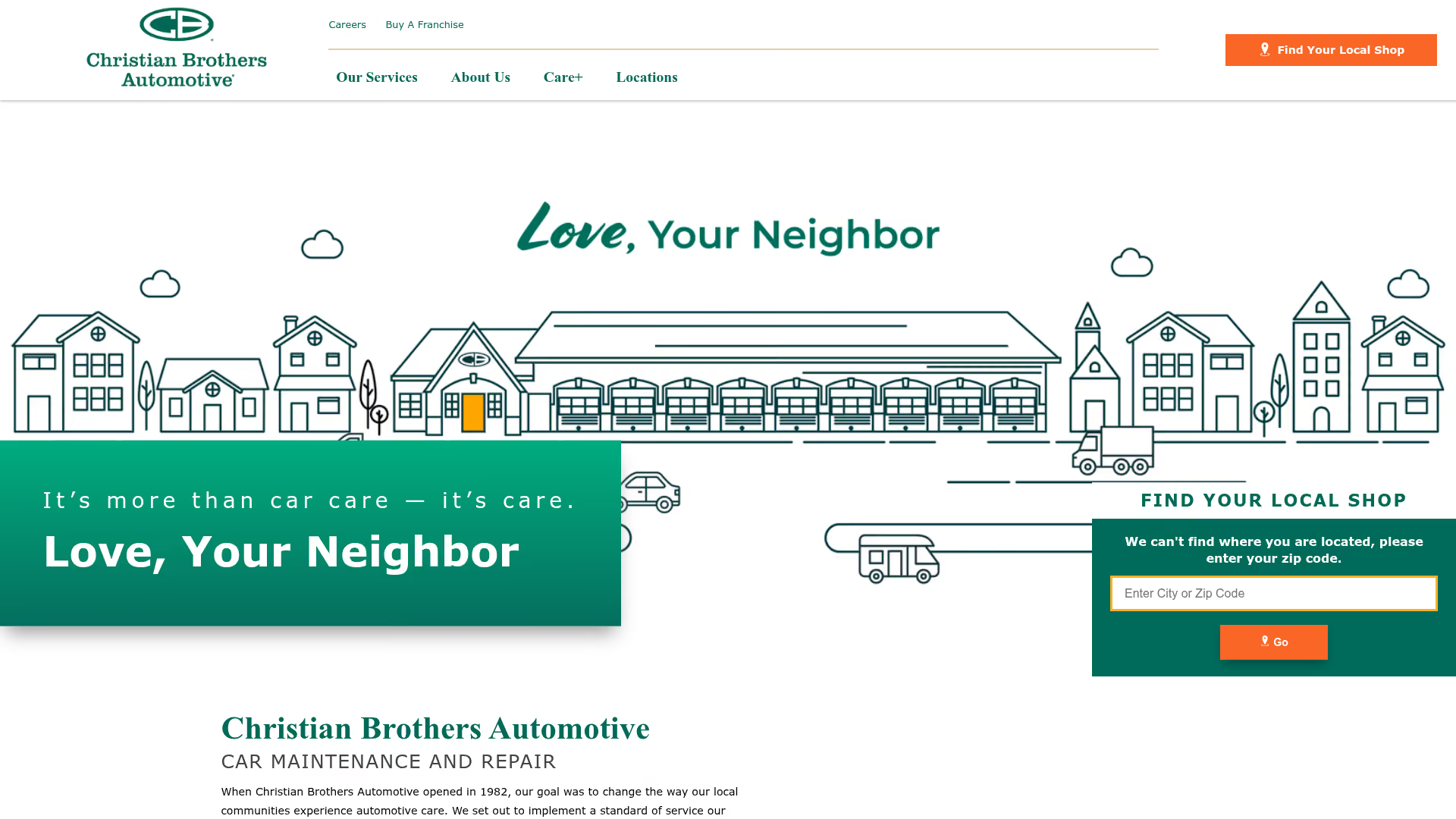
Christian Brothers Automotive operates hundreds of franchise locations and their website delivers a masterclass in earning trust at scale. The homepage leads with a clean, professional design and immediately positions the brand around their core differentiator: honest, relationship-based auto repair rooted in their company values.
The site features an online appointment scheduler that allows customers to select their location, describe their issue, and book a time slot without making a phone call. Each location page is fully built out with real photos, local team introductions, customer reviews, and service history—giving the national brand a local feel.
Why this works: Christian Brothers built their site around the single biggest objection customers have to auto repair shops: trust. By leading with values, showing real people, and making the booking process completely frictionless, they convert skeptical first-timers into loyal customers. The localized location pages also perform strongly in local search, giving each franchise shop its own SEO-optimized web presence.
Midas is a nationally recognized brand, and their website leans into that recognition while making it easy for local customers to connect with their nearest location. The site features a prominent "Find a Midas Near You" search bar above the fold, an active coupon and promotions section, and a full service menu with clear descriptions for each offering.
The site integrates online appointment scheduling across all locations, offers a financing section for larger repairs, and prominently features their national warranty—giving customers the confidence to choose Midas for significant work, not just oil changes.
Why this works: Midas understands that price transparency and ease of scheduling are the two biggest friction points in auto repair. Their coupon section directly addresses price sensitivity, while the online scheduling eliminates the friction of a phone call. The national warranty, prominently featured, reduces anxiety for customers considering larger or more expensive repairs. For independent shops, the lesson is clear: reduce uncertainty and you reduce objections.

Meineke's website is built around making the car repair process feel manageable for customers who aren't mechanically inclined. The site features a clear, category-driven service menu that organizes repairs by system—brakes, engine, oil, tires, exhaust—rather than technical part names. This approach reduces anxiety and helps customers quickly identify what they need without feeling overwhelmed.
The site includes a real-time online estimate tool, appointment scheduling, a financing option for larger repairs, and a loyalty rewards program. The "Coupons & Specials" section is prominently placed, making it easy for price-conscious customers to find savings before they commit.
Why this works: Meineke inverted the typical auto shop approach by designing the site for people who don't speak "mechanic." Organizing services by problem rather than part makes the experience intuitive. The estimate tool tackles the "how much will this cost me?" fear before it becomes a barrier. And the loyalty program turns one-time customers into repeat business—which is where the real revenue lives.

Brakes Plus focuses on brake service and a handful of complementary services—and their website reflects that focused positioning clearly. The site opens with a strong value proposition, prominent online coupons, and an easy appointment booking flow that lives on the homepage so customers never have to dig for it.
Each service page is thorough, explaining what the service includes, why it matters, and what customers can expect during the visit. The site features location-specific pages for each Brakes Plus shop, with local contact information, reviews, and hours clearly displayed.
Why this works: Brakes Plus demonstrates the power of specialization online. By focusing on a specific service category, their content is more detailed, more credible, and more likely to rank in local search. The coupon-forward homepage speaks directly to price-sensitive customers, and the thorough service descriptions answer questions before they become phone calls. Independent shops with a specialty—transmission, European imports, diesel—can replicate this approach with strong results.

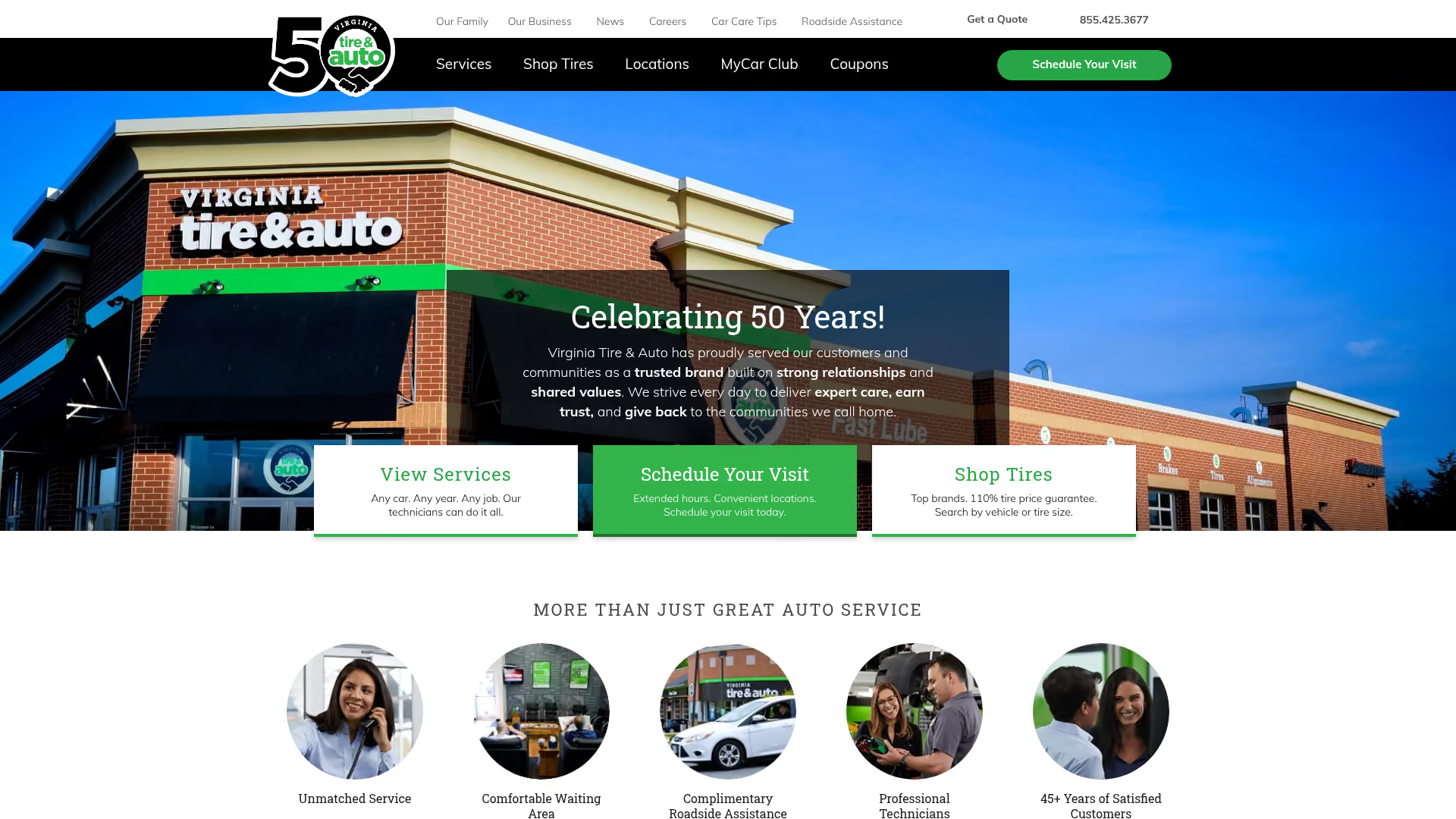
Virginia Tire & Auto is a regional chain that competes directly with national franchises—and their website is a major reason why they win. The site features a clean, professional design with a persistent online scheduling button, real photography of their shops and team, and a robust service menu that covers everything from tire installation to advanced diagnostics.
What sets the site apart is the depth of their local content. Each location page is fully built out with the shop's specific address, hours, staff, services, and customer reviews. Blog content covers local driving conditions, seasonal maintenance, and vehicle-specific tips. This combination of hyper-local content and technical depth has made them one of the strongest-performing independent chains in their region for organic search.
Why this works: Virginia Tire & Auto built a website that operates like a content machine—generating local search rankings while simultaneously building trust and reducing friction for potential customers. The real photos, staff profiles, and location-specific reviews create a personal connection that national brands struggle to match. For independent shops, this is the playbook: invest in local content, show real people, and make booking as easy as possible.
Each of these websites shares a common thread: they're built to earn trust, reduce friction, and give anxious car owners a clear, confident path to scheduling service.
At ESPLocal, we build auto repair websites with these same principles in mind—designed to generate more calls, more estimate requests, and more booked jobs. Book a free strategy call to see how we can build a website that sets your shop apart from the competition.
We've helped 100s of auto repair shops and service businesses build high-converting websites that generate more calls, more estimate requests, and more booked jobs — so you can focus on fixing cars.
Costs vary significantly depending on your approach. DIY website builders like Wix or Squarespace run $15–$50 per month but often lack the local SEO structure and conversion optimization that actually drives repair jobs. Professional agency-built auto repair websites typically range from $2,000 to $10,000+ depending on complexity and features. At ESPLocal, we design your website before you pay so you can see exactly what you're getting before committing.
Template-based websites can go live in a few days, but they require significant work to perform in local search. Custom agency websites typically take 4–8 weeks from kickoff to launch. At ESPLocal, we design your site upfront and deploy within 2–3 days of your approval—giving you both speed and quality without compromise.
Yes. Directory listings and Maps profiles are important, but they're not enough on their own. You don't control them—Google and Yelp can change how your listing appears, what reviews are highlighted, and even your ranking at any time. Your website is the one digital asset you own completely. It's also the destination that directory profiles, social media, and referrals all point back to. Without it, you're building your business on someone else's platform.
At minimum, your website should include a homepage, individual service pages (brakes, oil change, engine diagnostics, AC, transmission, tires, etc.), an about page, a team or technician page, a reviews or testimonials page, a contact page, and an online estimate or appointment request form. Creating separate pages for each major service and each city or neighborhood you serve significantly improves your visibility in local search.
Extremely important. Many auto repair searches happen in urgent situations—someone is broken down, getting an estimate on their lunch break, or searching late at night. The majority of these searches happen on mobile devices. If your website isn't optimized for mobile, you're losing customers in their most urgent moments. Google also ranks mobile-optimized sites higher in local search results, making mobile performance critical for visibility as well as conversion.
You don't need to list exact prices for every service, since costs vary by vehicle and condition. But offering starting prices or price ranges—"brake pads starting at $89 per axle"—builds transparency and trust. Drivers are often anxious about being overcharged. A site that addresses pricing directly, even generally, reduces that anxiety and makes customers more likely to call or request a quote.
The most common mistake is building a website and then ignoring it. Auto repair shops that update their site with fresh content—new services, seasonal promotions, updated reviews, blog posts about common vehicle issues—consistently outrank shops that treat their website as a one-time project. A stale, rarely updated website sends negative signals to both search engines and potential customers.
ESPLocal specializes in high-performance website design for auto repair shops. We design your site before you pay, refine it to your specifications, and deploy within 2–3 days of approval. With 42+ years of cumulative experience building websites for service businesses, we know exactly what it takes to build a site that earns trust, ranks locally, and converts visitors into booked repair jobs.
ESPLocal has helped 100s of plumbing companies rank higher, generate more qualified leads, and grow revenue through structured, proven local SEO.

Premium websites and structured local SEO for serious brick-and-mortar businesses.
© 2026 ESPLocal. All rights reserved.

