

Get more calls, more quote requests, and more booked jobs from your website.





When someone decides it's time to get back in shape, sign up for personal training, or find a new gym after moving to a new city, they don't drive around looking for signs. They grab their phone and search for "gyms near me" or "personal trainer in [their city]." Within seconds, they're scanning websites, comparing membership options, and deciding where to walk in for a tour.
If your gym or fitness center doesn't have a professional website—or has one that looks outdated and clunky—you're losing members to competitors who do.
This article breaks down why a professional website is essential for gyms and fitness centers, what makes one effective, and how to build one that actually generates memberships, class bookings, and revenue.
Want a website that works as hard as your members do? Book a free strategy call with ESPLocal to see how we can build a high-converting website for your fitness business designed before you pay a dime.
We've helped 100s of fitness businesses build high-converting websites that generate more memberships, more class bookings, and more revenue — so you can focus on running your gym.
A professional website is your most powerful sales tool, working 24/7 to attract new members, build trust, and drive recurring revenue. Here's what a premium, well-built website does for your fitness business:
Fitness decisions happen in moments of motivation. A New Year's resolution at midnight, a pair of jeans that don't fit anymore, a doctor's warning at a checkup—these moments send people straight to Google looking for a gym.
Without a website, you don't exist in that search. With a professional, SEO-optimized website, you show up right when potential members are actively looking for a place to start and ready to sign up.
75% of consumers judge a business's credibility based on website design alone.
A professional website with real photos of your facility, certified trainer bios, verified member testimonials, and clean design tells potential members: "This is a serious gym run by professionals." A poorly designed site—or no site at all—tells them the opposite.
Your website doesn't take rest days. While you're coaching a class or running the front desk, your website is answering questions, showcasing your classes, and capturing leads through free trial forms, class booking systems, and membership inquiries.
A well-designed gym website turns passive visitors into active members without you lifting a finger.
Instagram followers and Yelp reviews are valuable, but you don't own them. Algorithms change. Platforms shift. Reviews disappear. A website is the one digital asset you fully control.
It's where you tell your story, highlight transformations, display your class schedule, and present your gym exactly how you want potential members to see it.
A boutique studio or independent gym with a sharp, professional website can outshine a national chain with a generic, cookie-cutter site. Your website levels the playing field by showcasing what makes your gym different—your community, your coaching style, your facility, your results.
People aren't always looking for the biggest gym. They're looking for the one that feels most welcoming and capable of helping them reach their goals. Your website is where that impression gets made.
A comprehensive website answers the questions potential members would otherwise call or DM to ask: What are your membership prices? What classes do you offer? Do you have personal trainers? What are your hours?
Every question your website answers is time you get back to run your gym.
Building a gym website that actually generates memberships takes more than picking a template and adding your logo. You need a site that's fast, mobile-friendly, optimized for local search, and designed from the ground up to convert visitors into signed members.
Here's what to focus on:
Over 60% of fitness-related searches happen on mobile devices—often mid-motivation, with someone scrolling in their car or at home late at night ready to commit.
If your site doesn't load quickly and look great on a smartphone, you're losing the majority of potential members before they ever see your class schedule. Mobile-first means your site is built for phones first, then scaled up for tablets and desktops. Buttons must be tappable. Schedules must be readable without zooming. Phone numbers and "Book a Free Trial" must be one tap away.
A one-second delay in page load time can reduce conversions by up to 20%. People scrolling for a gym aren't patient browsers. If your site takes more than three seconds to load, they're hitting back and checking out the gym down the street.
Compress images, minimize code, use reliable hosting, and strip out anything that's slowing your pages down.
Your website needs to send clear signals to Google about what you do and where you do it. That means:
Including your city, neighborhood, and surrounding areas in page titles, headers, and content. Creating dedicated pages for each service you offer—personal training, group classes, CrossFit, yoga, strength training. Adding your NAP (Name, Address, Phone Number) consistently across every page. Embedding a Google Map showing your gym's location. Using local business schema markup so search engines understand your business at a deeper level.
A website that isn't built for local search is a website that doesn't get found.
A beautiful website that doesn't convert visitors into members is wasted money. Every page needs a clear purpose and an obvious next step.
Place prominent call-to-action buttons on every page: "Start Free Trial," "Book a Tour," "Join Now." Pin your phone number to the header where it's visible the moment someone lands on your site. Use short, simple contact forms—name, phone, fitness goal—because long forms kill conversion. Feature trust signals prominently: trainer certifications, member success stories, before-and-after photos, years in business, and community awards.
Your website should match the energy and quality of your gym. If your facility is clean, modern, and well-equipped, your website should reflect that same standard.
Use real photos of your equipment, your trainers, and your members in action—not generic stock images of unrealistically fit models. Write in your own voice. Highlight what makes your gym worth joining over the competition.
At ESPLocal, we've built websites for gyms and fitness centers across the country, and we know exactly what drives results in this industry.
Our approach is different from most agencies. We design your website before requesting payment. You review it, we refine it, and once you approve it, we deploy within 2–3 days. No surprises, no guesswork, no months of back-and-forth revisions.
Here's what you get with an ESPLocal gym website:
Mobile-first and high-performance. Every site is engineered for speed and built for the devices your members actually use when they're ready to sign up.
Structured for local SEO. We build your site from the ground up to rank in your service area—with proper schema, location pages, and keyword targeting baked in from day one.
Conversion-focused by design. Free trial CTAs, class booking integrations, lead capture forms, and trust signals placed exactly where they drive action.
Built to reflect your real-world quality. No generic templates. Your site is custom-designed to showcase what makes your gym worth joining.
With 42+ years of cumulative experience building websites for service-based businesses, we know what works and what doesn't.
Schedule a free strategy call to see how we can build a website that generates more memberships and grows your fitness business.
Studying real-world examples is one of the fastest ways to understand what makes a gym website effective. These five sites demonstrate the design principles, trust signals, and conversion strategies that actually drive memberships.
Equinox sets the standard for premium fitness branding. Their website opens with cinematic imagery, bold typography, and an immediately aspirational feel. Every element—from the photography to the copy—communicates that this is a luxury experience, not just a gym. Class schedules, trainer bios, and membership options are all cleanly presented, and the site makes it easy to find and book at your nearest location.
Why this works: Equinox has built a brand where the website itself communicates exclusivity and quality before a visitor ever reads a word of copy. The visual experience does the selling. For high-end fitness businesses, this shows how design and brand positioning alone can drive premium memberships.

Orangetheory's website is built around one of the strongest conversion strategies in the fitness industry: the free first class. The "Book a Free Class" CTA is impossible to miss, appearing on every page and removing the biggest barrier to entry. The site clearly explains their unique heart-rate-based training methodology, showcases the science behind it, and features member testimonials with real results. Their location finder makes it easy to find the nearest studio, and each studio page is optimized for local search with reviews, schedules, and trainer bios.
Why this works: Orangetheory removes friction at every step. The free class offer eliminates risk, the methodology builds credibility through science, and the location-based pages give them massive local SEO reach across thousands of studios. They've turned the website into a sign-up funnel that's nearly impossible to leave without booking.

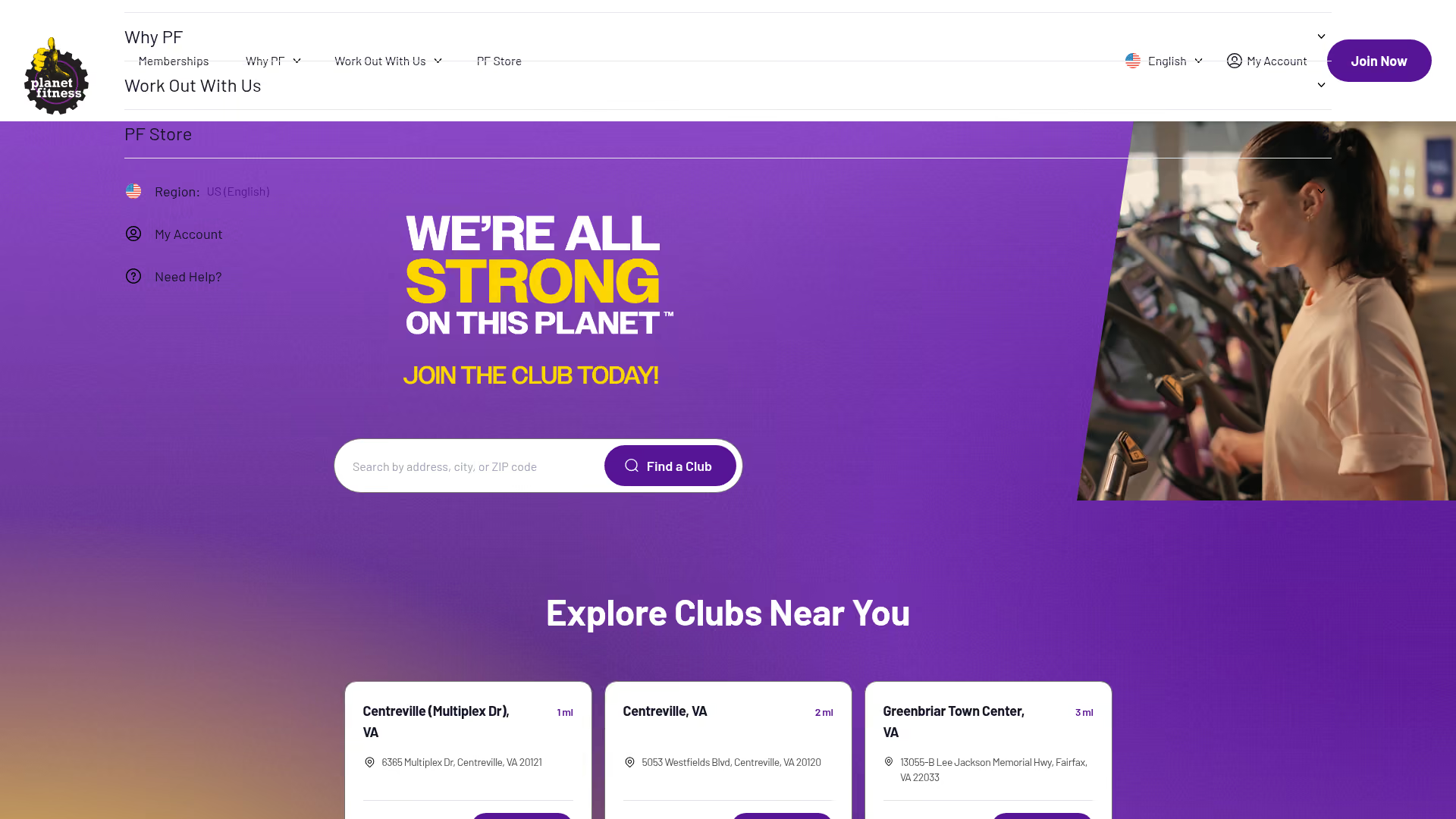
Planet Fitness leans hard into accessibility and affordability. Their website leads with their famous "$10 a month" pricing and "Judgement Free Zone" branding—two messages that directly address the biggest fears beginners have about joining a gym: cost and intimidation. The site features a simple online sign-up process, transparent membership comparisons (Classic vs. Black Card), and location pages for every club they operate. Their messaging is consistent throughout: this is a welcoming, no-pressure environment for everyday people, not hardcore bodybuilders.
Why this works: Planet Fitness knows their audience and speaks directly to them. Every element—from the purple-and-yellow color scheme to the friendly copy to the upfront pricing—reinforces their positioning as the gym for people who don't feel like "gym people." The site converts because it makes joining feel safe, simple, and affordable.
Barry's takes a bold, unapologetic approach that perfectly mirrors their workout: intense, premium, and results-driven. The website leads with energy and community. Class booking is front and center, with a streamlined system that lets members reserve specific spots in upcoming classes. The website features studio pages for every location, instructor profiles that build personal connection before members ever attend, and lifestyle content that extends the brand beyond just workouts. The "Book a Class" CTA dominates the user experience.
Why this works: Barry's has built a website that feels like the workout itself—intense, focused, and designed to drive action. By featuring instructors prominently, they create personal connections that turn first-time visitors into loyal regulars who follow specific trainers and keep coming back.

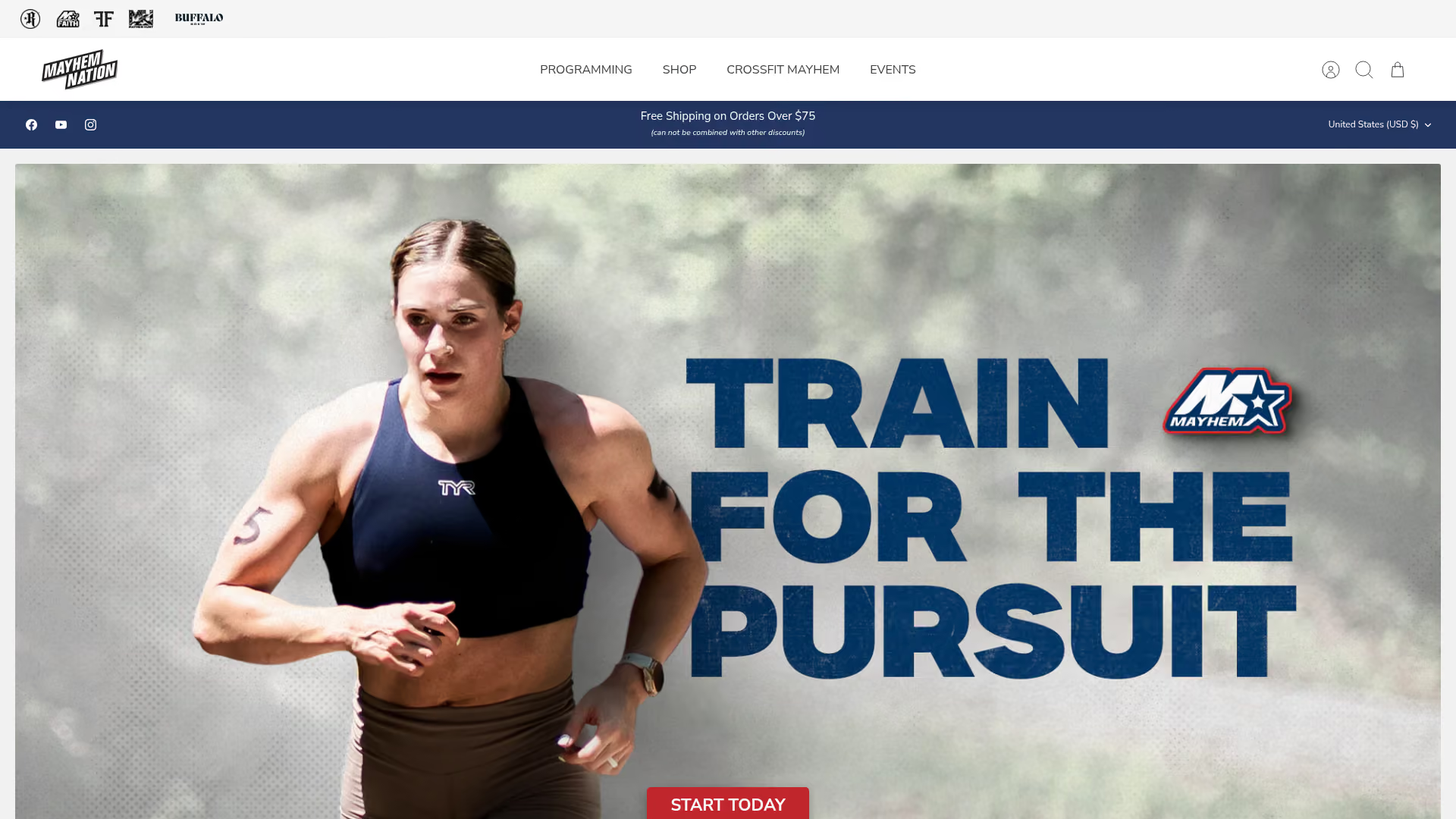
CrossFit Mayhem, owned by five-time CrossFit Games champion Rich Froning, demonstrates how a single-location gym can build a globally recognized brand through smart web design. The site leads with the gym's championship pedigree and faith-based community values, creating an instant emotional connection with their target audience. The website features a clear class schedule, detailed program descriptions, online store for branded apparel, and a free trial offer for new members. Their content marketing—including videos, athlete features, and training resources—gives the site depth and keeps visitors engaged long after their first visit.
Why this works: CrossFit Mayhem proves that a single gym can punch far above its weight class with the right web presence. By leading with credibility (championship results), values (community and faith), and content (workouts, videos, athlete stories), they've turned a local gym into a destination brand. The site builds trust quickly and converts visitors who connect with the values into loyal members and online followers.
Each of these websites demonstrates a core principle: the best gym websites focus on building trust, removing friction, and making it ridiculously easy for potential members to take the next step.
At ESPLocal, we build gym websites with these exact principles in mind, designed to convert visitors into booked tours and signed memberships. Book a free strategy call to see how we can create a website that positions your fitness business as the obvious choice in your market.
We've helped 100s of fitness businesses build high-converting websites that generate more memberships, more class bookings, and more revenue — so you can focus on running your gym.
Costs vary widely depending on your approach. DIY website builders like Wix or Squarespace start at $15–$50 per month but typically lack the SEO structure and conversion optimization that generates real memberships. Professional agency-built websites generally range from $2,500 to $15,000+ depending on complexity and features. At ESPLocal, we design your website before requesting payment so you can see exactly what you're getting before you commit a dollar.
Template sites can be set up in a few days, though they usually need significant customization to perform well. Custom-designed agency websites typically take 4–8 weeks. ESPLocal designs your site upfront and deploys within 2–3 days of approval—combining speed with quality you can actually see before committing.
Yes, absolutely. Directory listings and social media are valuable, but you don't own them. Google can change its algorithm overnight, platforms can modify how content displays, and any of these can update policies without notice. Your website is the one digital asset you control completely. It's also the destination that every other marketing channel drives traffic back to.
At minimum: a homepage, individual service pages (personal training, group classes, yoga, CrossFit, strength training, membership plans), an about page, a reviews/testimonials page, dedicated service area pages, and a contact page. Creating dedicated pages for each service and each city you serve significantly improves your local search visibility.
Critical. Over 60% of fitness-related searches happen on mobile devices, and that percentage spikes during moments of peak motivation—late-night resolutions, post-doctor-visit decisions, spontaneous sign-up urges. Google also uses mobile-first indexing, meaning it evaluates your mobile site first when determining rankings. If your site isn't fully responsive, you're invisible to most of your potential members.
Yes. A well-structured website with proper on-page SEO, local keywords, fast loading speed, schema markup, and high-quality content is one of the most effective ways to climb search rankings. Your website works alongside your Google Business Profile to signal to search engines that your gym is relevant, authoritative, and trustworthy in your specific service area.
Hiding pricing or using stock photos. Potential members want to know what membership costs before they reach out—gyms that bury pricing behind contact forms send visitors straight to competitors. The second biggest mistake is using generic stock images of unrealistically fit models instead of real photos of your facility, trainers, and members. Nothing kills credibility faster.
In most cases, yes. You don't need to publish every package and add-on, but providing clear membership tiers with starting prices significantly increases conversions and reduces the back-and-forth that wastes your time. Transparent pricing builds trust, pre-qualifies leads, and stops motivated buyers from bouncing to a competitor who makes it easier to understand costs upfront. Transparency wins in fitness.
ESPLocal specializes in premium website development for gyms and fitness centers. We design your site before you pay, refine it to your specifications, and deploy within 2–3 days. With 42+ years of cumulative experience helping service businesses grow, we know exactly what it takes to build a website that drives memberships, books classes, and grows revenue.
ESPLocal has helped 100s of plumbing companies rank higher, generate more qualified leads, and grow revenue through structured, proven local SEO.

Premium websites and structured local SEO for serious brick-and-mortar businesses.
© 2026 ESPLocal. All rights reserved.

