

Get more consultations, retain more clients, and grow your practice with a website that works 24/7.





When someone gets rear-ended on the highway, served with divorce papers, or arrested at 2 a.m., they don't pull out the Yellow Pages. They grab their phone and search "lawyer near me" or "DUI attorney in [city]." Within seconds, they're scanning results, judging websites, and deciding who gets the call that could change their life.
If your law firm doesn't have a professional website—or has one that looks like it was thrown together a decade ago—you're handing those clients to the firm down the street.
This article breaks down why a professional website is essential for lawyers and law firms, what makes one effective, and how to build one that actually generates consultations, retained clients, and revenue.
Want a website that works as hard as you do? Book a free strategy call with ESPLocal to see how we can build a high-converting website for your law firm—designed before you pay a dime.
See your finished website before you pay a dime. We design it first, you review and approve, then we deploy in 2–3 days.
A professional website is your most powerful business development tool, working 24/7 to attract qualified clients, build authority, and drive case volume. Here's what a premium, well-built website does for your law firm:
Legal problems don’t wait for business hours. A car accident at midnight, a DUI arrest on a Saturday, a divorce filing served Monday morning—these situations trigger immediate, high-urgency searches for legal help.
Without a professional, SEO-optimized website, your firm doesn’t show up in those searches. With one, you’re right there when someone is ready to hire an attorney and price is secondary to finding the right person immediately.
People choosing an attorney are making a high-stakes, high-trust decision. Before they call, they research. They read bios, look at case results, check reviews, and assess whether the firm looks like it can handle their specific situation.
A professional website with detailed attorney profiles, practice area depth, client testimonials, and case results tells a prospective client: this firm is credible, experienced, and worth calling. A generic or outdated website tells them the opposite.
Legal emergencies don’t happen on a schedule. Your website captures contact forms, consultation requests, and calls 24/7—while you’re in court, in meetings, or at home. A well-built law firm website with clear calls to action and an easy intake form turns late-night searchers into booked consultations.
Avvo, FindLaw, Martindale-Hubbell, and Justia all have value—but you don’t control them. Competitors appear beside you. Reviews may be cherry-picked. Your profile is standardized.
Your website is the one platform where you fully control how your firm is presented: your specialty, your results, your team, your story. No other firm shares that page with you.
A solo practitioner or small firm with a sharp, professional website can compete directly with large firms for specific practice areas in local search results. SEO, attorney profiles, and client testimonials level the playing field in ways that advertising budget alone cannot.
Prospective clients don’t always want the largest firm—they want the right attorney for their specific situation. Your website is where you make that case.
How many intake calls do you receive from people with matters outside your practice area, or who have fundamentally unrealistic expectations? A website with detailed practice area pages, FAQs, and clear descriptions of who you serve can pre-qualify leads before they ever call—saving your team significant time and improving the quality of every consultation you conduct.
A law firm website with consistent, authoritative content—practice area pages, case type guides, jurisdiction-specific articles—builds search authority over time. Each piece of content is an additional entry point for prospective clients searching for the exact legal help you provide.
Unlike paid advertising, which stops the moment you stop paying, organic search authority compounds. A website investment made today continues generating leads for years.
Building a law firm website that actually drives case volume requires more than slapping your firm name on a template and uploading a stock photo of a gavel. You need a site that's fast, mobile-friendly, optimized for local search, and designed to convert anxious visitors into signed clients.
Here's what to focus on:
Over 50% of legal searches happen on mobile devices—and in emergency situations, that number climbs higher. Someone who’s just been arrested, injured in an accident, or served with divorce papers isn’t sitting at a desktop. They’re searching on their phone, often in a state of high stress.
Your phone number must be tappable immediately. Your contact form must work flawlessly on mobile. Every page must load in under 3 seconds. These aren’t optional—they’re the baseline for capturing high-intent emergency legal searches.
Prospective clients search for specific legal help: “DUI attorney in [city],” “personal injury lawyer near me,” “divorce attorney [county].” Each practice area your firm handles deserves its own dedicated page—optimized for the specific searches potential clients are making, and detailed enough to demonstrate genuine expertise in that area of law.
Generic “we handle everything” pages don’t rank for specific searches and don’t build the credibility that practice-specific pages do.
Law is inherently local—clients need attorneys licensed in their jurisdiction who know the local courts, judges, and procedures. Your website needs to rank for searches that include your city, county, and state, with consistent location information throughout and dedicated pages for every geographic market you serve.
Implement local business schema markup. Maintain a complete Google Business Profile. Collect and respond to Google reviews. A law firm without strong local SEO is invisible to the clients who need exactly what you offer.
Bar admissions, years in practice, case results, client testimonials, peer recognitions, and attorney biographies with real photos—these are the signals prospective clients look for when choosing an attorney. Feature them prominently throughout your site, not buried in an “About” page no one reads.
A law firm website that leads with results and credentials converts prospective clients. A website that leads with vague claims about “experienced representation” and “aggressive advocacy” does not.
Your website should communicate exactly the kind of firm you are—the practice areas you focus on, the clients you serve best, and the results you deliver. If you’re a high-volume personal injury firm, your website should communicate scale and results. If you’re a boutique estate planning practice, it should communicate care, expertise, and personalized service.
Generic law firm websites all look and sound the same. Your website should be as specific as your practice—because the clients who are the best fit for your firm will recognize themselves in it.
At ESPLocal, we’ve built websites for law firms and legal practices across the country, and we know exactly what drives qualified leads in this industry.
Our approach is different from most agencies. We design your website before requesting payment. You review it, we refine it, and upon approval, we deploy within 2–3 days. No surprises, no guesswork, no months of back-and-forth while prospective clients hire a competitor.
Here’s what you get with an ESPLocal law firm website:
Mobile-first and high-performance. Every site is built for the mobile searches that drive the majority of legal inquiries.
Structured for local SEO. We build your site to rank in your practice areas and geographic markets with proper schema, location pages, and practice-area keyword targeting baked in.
Conversion-focused by design. Prominent phone numbers, easy intake forms, attorney credentials, and trust signals placed exactly where prospective clients are ready to make contact.
Built to reflect your real-world practice. We don’t use generic legal templates. Your site is designed to showcase your attorneys, your results, and what makes your firm the right choice for your specific client base.
With 42+ years of cumulative experience building websites for service businesses, we know what works and what doesn’t.
Schedule a free strategy call to see how we can build a website that drives more qualified leads and more retained clients for your law firm.
Looking at real-world examples is one of the fastest ways to understand what makes a law firm website effective. These five sites demonstrate the design principles, trust signals, and conversion strategies that drive results.
Dolman Law Group, a Florida-based personal injury and mass tort firm, runs one of the most conversion-focused websites in the legal industry. The homepage leads with hard numbers that matter to injury victims: over 400 settlements above pre-trial offers, totaling more than $400 million in compensation, a client base exceeding 40,000 individuals, and a combined 120+ years of attorney experience.
The site features free case evaluation forms on every page, dedicated location pages for every market they serve, and a no-fee promise that removes the financial barrier to hiring. The founder's personal story—growing up watching his father get shortchanged by a "settlement mill" lawyer—runs throughout the brand and gives the firm a human core that most personal injury sites completely lack.
Why this works: Dolman Law Group leads with proof, not promises. Every page is engineered to address the two biggest fears injury victims have: "Can this firm actually win my case?" and "Can I afford to hire them?" The numbers answer the first question. The contingency fee model answers the second. The result is a website that converts anxious visitors into retained clients.

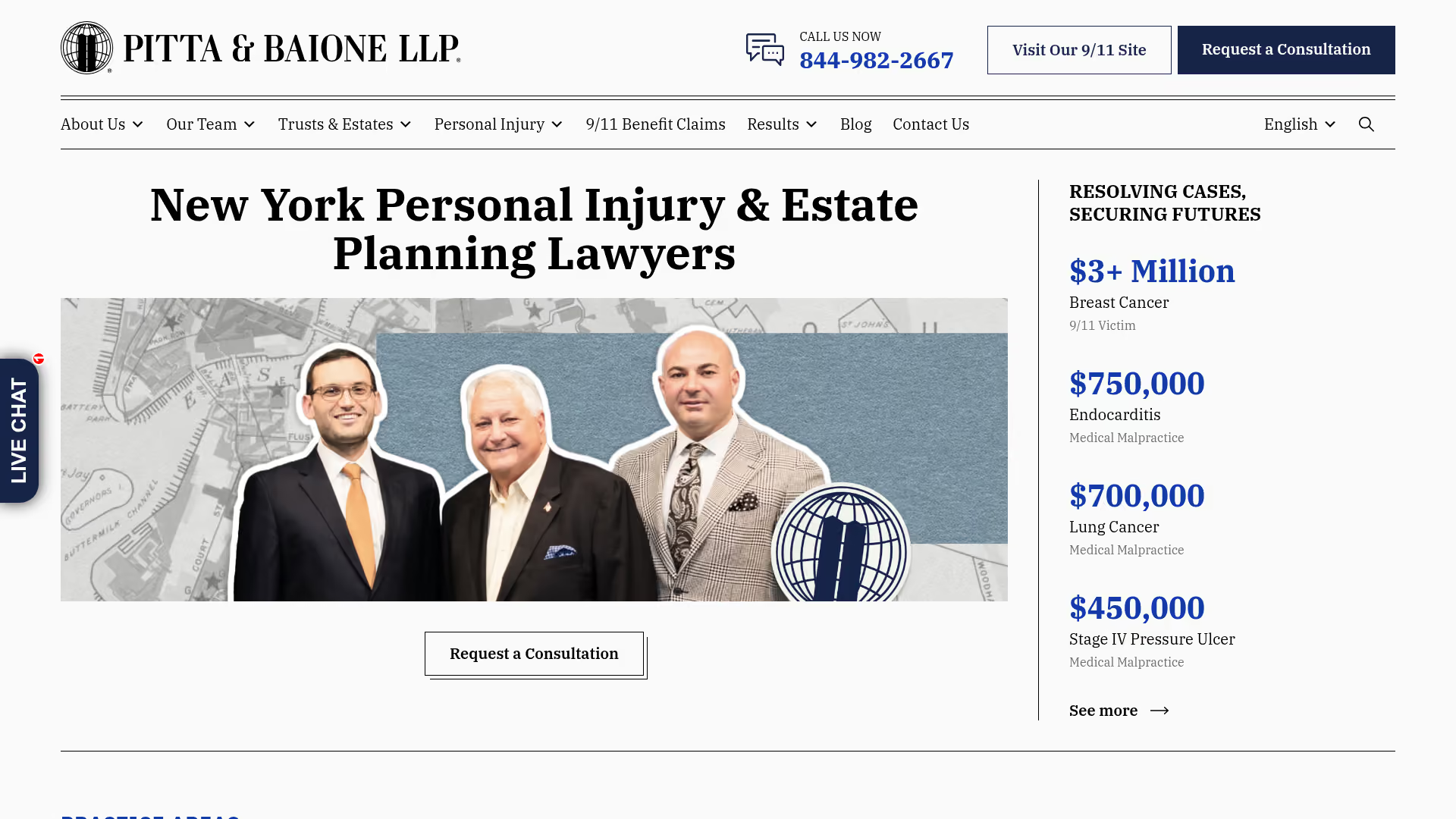
Pitta & Baione's website is a masterclass in legal niche branding. The site features a custom header that moves polka-dots with your mouse, eye-catching unique graphics, and a scrolling phone number toward the bottom of the page that leaves little to be desired. The firm focuses on 9/11 victim compensation cases—a deeply specific practice area—and the design treats that focus as a strength rather than a limitation.
Every element of the site reinforces credibility for the exact audience they want to reach: first responders, survivors, and families navigating the VCF and World Trade Center Health Program. The user experience feels modern and professional without losing the gravity the subject matter demands.
Why this works: Pitta & Baione proves that niche specialization sells better than generalist messaging. By committing fully to one practice area and presenting it through distinctive design, the firm positions itself as the obvious choice for that specific need. Visitors don't have to wonder if these attorneys understand their situation—the entire site is built around it.
Bick Law LLP's website uses unexpected imagery of animals, paired with witty and thought-provoking statements, to highlight the firm's distinct approach and practice. The site features a monotone palette that gradually fades into the actual color of the animals, adding a dynamic and engaging element. This purposeful functionality, combined with the innovative design, helped the website rack up several awards, including a prestigious Webby Award nomination.
Bick Law focuses on environmental law—a practice area most firms present in the most predictable way possible. Bick Law went the opposite direction and built a site that earns attention through creativity rather than cliché.
Why this works: Bick Law proves that differentiation through design can build authority faster than conventional credentials. In a crowded legal landscape, their commitment to creativity signals confidence and originality—qualities clients want in an environmental litigator who needs to think outside the box.

Gordon McKernan Injury Attorneys, one of Louisiana's most recognized personal injury firms, leads with unmistakable brand authority. The homepage features bold results-driven messaging, prominent client testimonials, and Gordon McKernan himself front and center—communicating immediately that this is a firm led by a real person who personally cares about every case.
The site prominently features their settlement record, 24/7 availability, and a zero-fee promise that makes hiring them feel risk-free. Location pages cover every market in Louisiana they serve, and intake is streamlined across every device with prominent click-to-call buttons throughout.
Why this works: Gordon McKernan succeeds because it humanizes a large firm. Rather than hiding behind corporate branding, the site leads with Gordon's face and story, creating a personal connection that resonates with injury victims who want to feel like they're hiring an attorney—not a corporation. The combination of real results, accessibility, and no-fee promise removes every barrier to contacting the firm.

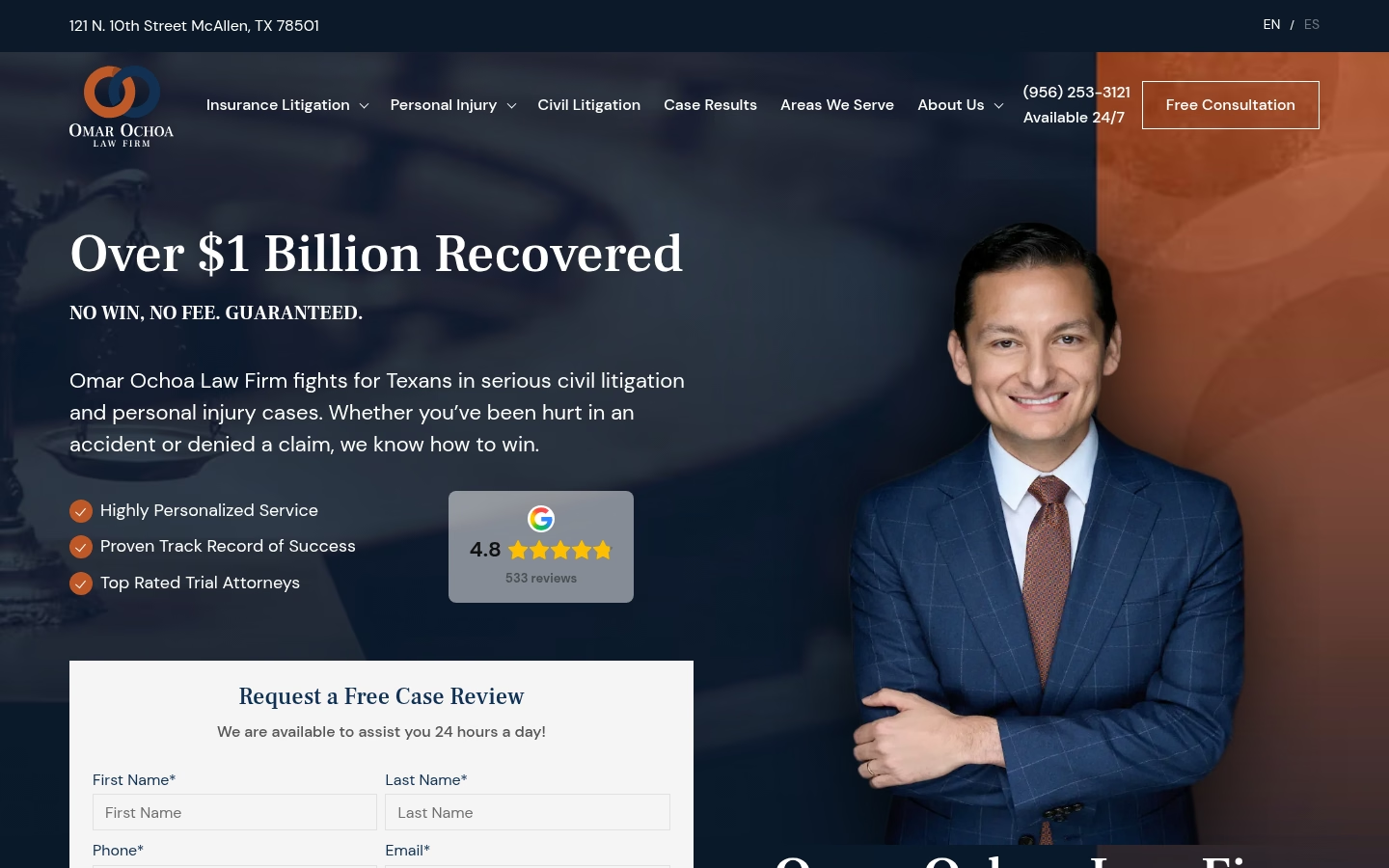
Omar Ochoa Law's website grabs attention instantly with a picture of Omar front and center and a bold headline: "Over $1 Billion Recovered." There's zero confusion about the firm's primary practice areas: serious civil litigation and personal injury cases, along with 4.8-star ratings across 300+ reviews.
The site doesn't bury the lead behind corporate-speak or generic mission statements. Above the fold, the visitor sees the attorney's face, a billion-dollar results figure, the practice areas, and the social proof. Every CTA pushes toward a free consultation, and the layout keeps friction to an absolute minimum.
Why this works: Omar Ochoa's site demonstrates a principle most law firms ignore: clarity beats cleverness. Visitors arriving on the homepage know within seconds who the attorney is, what kind of cases he wins, and how big those wins are. There's no scavenger hunt for credibility—it's all visible immediately. For high-stakes civil litigation clients evaluating multiple firms, that instant clarity is often the difference between getting the call and getting skipped.
See your finished website before you pay a dime. We design it first, you review and approve, then we deploy in 2–3 days.
Costs vary significantly depending on your approach. DIY website builders like Wix or Squarespace can cost as little as $20–$50 per month, but they typically lack the local SEO structure, conversion optimization, and professional design that drive real client inquiries. Professional agency-built law firm websites typically range from $3,000 to $15,000+ depending on complexity and number of practice areas. At ESPLocal, we design your website before requesting payment so you can see exactly what you're getting before committing.
Template-based websites can be set up quickly but usually need significant customization to rank and convert. Custom-designed law firm websites from agencies typically take 8–16 weeks. ESPLocal designs your site upfront and deploys within 2–3 days of approval, combining the quality of a custom build with the speed of a template.
Absolutely. Directory listings build visibility, but you don't control them. Competitors appear right next to you on those platforms. Your website is the one place where you control everything—your story, your results, your messaging, your brand. It's also where you capture direct contact information and intake forms without paying directory referral fees.
At minimum, your law firm website needs a homepage, a dedicated page for every practice area you handle, attorney bio pages, a case results or verdicts page, a client testimonials page, a contact page with an intake form, and location pages for every market you serve. Blog or resource content helps with SEO and demonstrates expertise over time.
Yes. A well-structured law firm website with proper on-page SEO, practice area content, local keywords, legal schema markup, and fast loading speeds is one of the most effective ways to rank for searches like "personal injury attorney in [city]" or "DUI lawyer near me." Your website and Google Business Profile work together to establish your firm as the authoritative local choice.
The most common mistake is treating the website as a one-time project rather than an ongoing business development tool. Outdated attorney photos, stale case results, broken intake forms, and pages that haven't been touched in years all signal to both search engines and potential clients that the firm isn't current. Your website needs regular attention to maintain and grow its performance.
ESPLocal has helped 100s of plumbing companies rank higher, generate more qualified leads, and grow revenue through structured, proven local SEO.

Premium websites and structured local SEO for serious brick-and-mortar businesses.
© 2026 ESPLocal. All rights reserved.

