

Get more reservations, more online orders, and more loyal customers with a restaurant website built to convert.





When someone gets hungry on a Friday night, they don't open a phone book. They grab their phone and search for "restaurants near me," "best Italian downtown," or "places open right now." Within seconds, they're checking menus, reading reviews, looking at photos of dishes, and deciding where to eat based almost entirely on what they find online.
If your restaurant doesn't have a professional website—or has one that's hard to navigate, doesn't show your menu, or looks like it hasn't been updated since 2015—you're losing those diners to competitors who made the investment.
This article breaks down why a professional website is essential for restaurants, what makes one effective, and how to build one that actually drives more covers, more orders, and more repeat customers.
Want a website that fills seats while you're focused on the kitchen? Book a free strategy call with ESPLocal to see how we can build a high-converting website for your restaurant—designed before you pay a dime.
See your finished website before you pay a dime. We design it first, you review and approve, then we deploy in 2–3 days.
A professional website is your most powerful marketing tool, working 24/7 to attract diners, drive online orders, and build a loyal customer base. Here's what a premium, well-built website does for your restaurant business:
Restaurant decisions are often spontaneous and immediate. A couple deciding on a last-minute date night spot. A group of coworkers picking somewhere for lunch. Someone with a specific taco craving at 9 p.m. who needs a place open right now. These moments happen constantly—and they all start with a Google search.
Without a professional, SEO-optimized website, you’re invisible in those searches. With one, you show up right when hungry customers are actively looking, ready to make a reservation or order.
Before visiting a new restaurant, most people do some level of online research. They look at photos of the food and interior, check the menu and prices, read reviews, and look for signals that the experience will match their expectations.
A professional website with great food photography, a clearly presented menu, and genuine diner reviews builds that confidence before they ever make a reservation. A poorly designed website—or no website at all—sends diners to Google searches for someone else.
Your website captures dinner reservations at midnight, brunch bookings on Saturday morning, and delivery orders during the Sunday game—all without your team lifting a finger. Integrated reservation tools and online ordering systems mean your website is generating revenue 24/7, not just during the hours your phone is answered.
Every table booking or online order that comes through your website is revenue that didn’t require a staff member to handle a call.
Yelp, Google Maps, DoorDash, Grubhub, and Uber Eats are all useful—but you don’t own them. DoorDash takes 15–30% of every order placed through their platform. Yelp controls which reviews appear most prominently. Your restaurant shows up side by side with competitors you’d rather not be compared to.
Your website is the one place where you control everything: your photos, your story, your menu, your vibe. It’s also the only channel where online orders go straight to you without a 30% cut taken off the top.
National chains spend millions building digital infrastructure and brand recognition. But a local restaurant with a beautiful, well-optimized website can outperform a chain location in neighborhood search results—especially for searchers who are actively looking for something independent, local, and distinctive.
Your website is where your personality, your story, and your food speak for themselves—something no franchise playbook can replicate.
How many times a day does your team answer the phone for the same questions? What are your hours? Do you have parking? Is your menu gluten-free? Do you take reservations? A professional website that answers these questions clearly and completely can significantly reduce the call volume your front-of-house team handles—freeing them up for the guests who are already in your restaurant.
An FAQ page, a clear hours and location section, an up-to-date menu, and a reservation link all do this work automatically, every hour of every day.
Print ads, radio spots, and direct mail campaigns require constant spending to maintain visibility—and their impact is nearly impossible to measure. A professional restaurant website, once built and optimized, generates steady organic traffic from local dining searches month after month without recurring advertising costs.
Combined with an active Google Business Profile and the occasional social media post linking back to your site, your website becomes the anchor of a low-cost, high-impact marketing strategy that works while your team focuses on the food and the experience.
Building a restaurant website that actually grows your business requires more than slapping your logo on a template and uploading a PDF menu. You need a site that's fast, mobile-friendly, optimized for local search, and designed to convert browsers into booked tables and paid orders.
Here's what to focus on:
Over 80% of restaurant searches happen on mobile phones—often from someone who’s hungry, out of the house, and making a decision in the next five minutes. A website that loads slowly, displays a menu that’s hard to read on a small screen, or buries the reservation button is losing those customers to competitors whose sites load instantly and make booking effortless.
Every page must load in under 3 seconds. Your menu must be readable without pinching and zooming. The reservation button and phone number must be immediately visible without scrolling. These aren’t design preferences—they’re the baseline requirements for capturing mobile diners.
In the restaurant business, people eat with their eyes first—and they browse with their eyes before they book. Professional food photography is the single most impactful investment a restaurant can make in its digital presence. High-quality photos of signature dishes, your dining room atmosphere, and your team at work tell a story that no amount of copywriting can match.
Smartphone photos taken by staff, blurry images from early days, and stock photos of generic food all signal the same thing to potential diners: this restaurant doesn’t take their presentation seriously. If you take your food seriously, show it.
Your menu is the first thing most visitors want to see, and it needs to be easy to find, easy to read, and accurate. A PDF menu that requires downloading, a JPG that requires pinching to read, or a menu that hasn’t been updated since a seasonal change are all conversion killers.
Build your menu as native web content—not a document or image—so it renders beautifully on every device, loads quickly, and can be updated in minutes when dishes change. Include prices. Diners who can’t find your prices will assume the worst and look elsewhere.
Restaurant searches are hyperlocal and often specific: “brunch in [neighborhood],” “best tacos near me,” “Italian restaurant downtown [city].” Your website needs to rank for the searches your potential diners are actually using—which means including your neighborhood, cuisine type, and nearby landmarks consistently throughout your content.
Add restaurant schema markup so Google can display your hours, price range, and cuisine type directly in search results. Maintain a complete, accurate Google Business Profile. The restaurants that show up in Google’s local pack—those three featured results at the top of local searches—are almost always the ones with the best-optimized websites and profiles.
Your website should make someone feel what it’s like to eat at your restaurant before they’ve ever sat down. If your restaurant is intimate and romantic, the website should feel intimate and romantic. If it’s loud, fun, and irreverent, the website should be loud, fun, and irreverent. If it’s a neighborhood staple where everyone knows your name, the website should feel warm and familiar.
A generic template website that looks like every other restaurant on the internet fails to communicate what makes yours worth seeking out. Your website is your first impression—and in the restaurant business, atmosphere and identity sell as much as the food does.
At ESPLocal, we’ve built websites for restaurants and food businesses across the country, and we know exactly what makes diners choose one restaurant over another online.
Our approach is different from most agencies. We design your website before requesting payment. You review it, we refine it, and upon approval, we deploy within 2–3 days. No surprises, no guesswork, no months of back-and-forth while seats go unfilled.
Here’s what you get with an ESPLocal restaurant website:
Mobile-first and high-performance. Every site is built for the mobile diners who make up 80%+ of restaurant search traffic.
Structured for local SEO. We build your site to rank in your neighborhood and cuisine category with proper restaurant schema, location-specific content, and keyword targeting baked in.
Conversion-focused by design. Reservation buttons, online ordering integration, your full menu, and trust signals placed exactly where hungry visitors are ready to commit.
Built to reflect your real-world experience. We don’t use generic restaurant templates. Your site is designed to communicate your atmosphere, your food, and why your restaurant is worth a visit.
With 42+ years of cumulative experience building websites for service and hospitality businesses, we know what works and what doesn’t.
Schedule a free strategy call to see how we can build a website that fills more seats and drives more orders for your restaurant.
Looking at real-world examples is one of the fastest ways to understand what makes a restaurant website effective. These four sites demonstrate the design principles, brand storytelling, and conversion strategies that drive results.
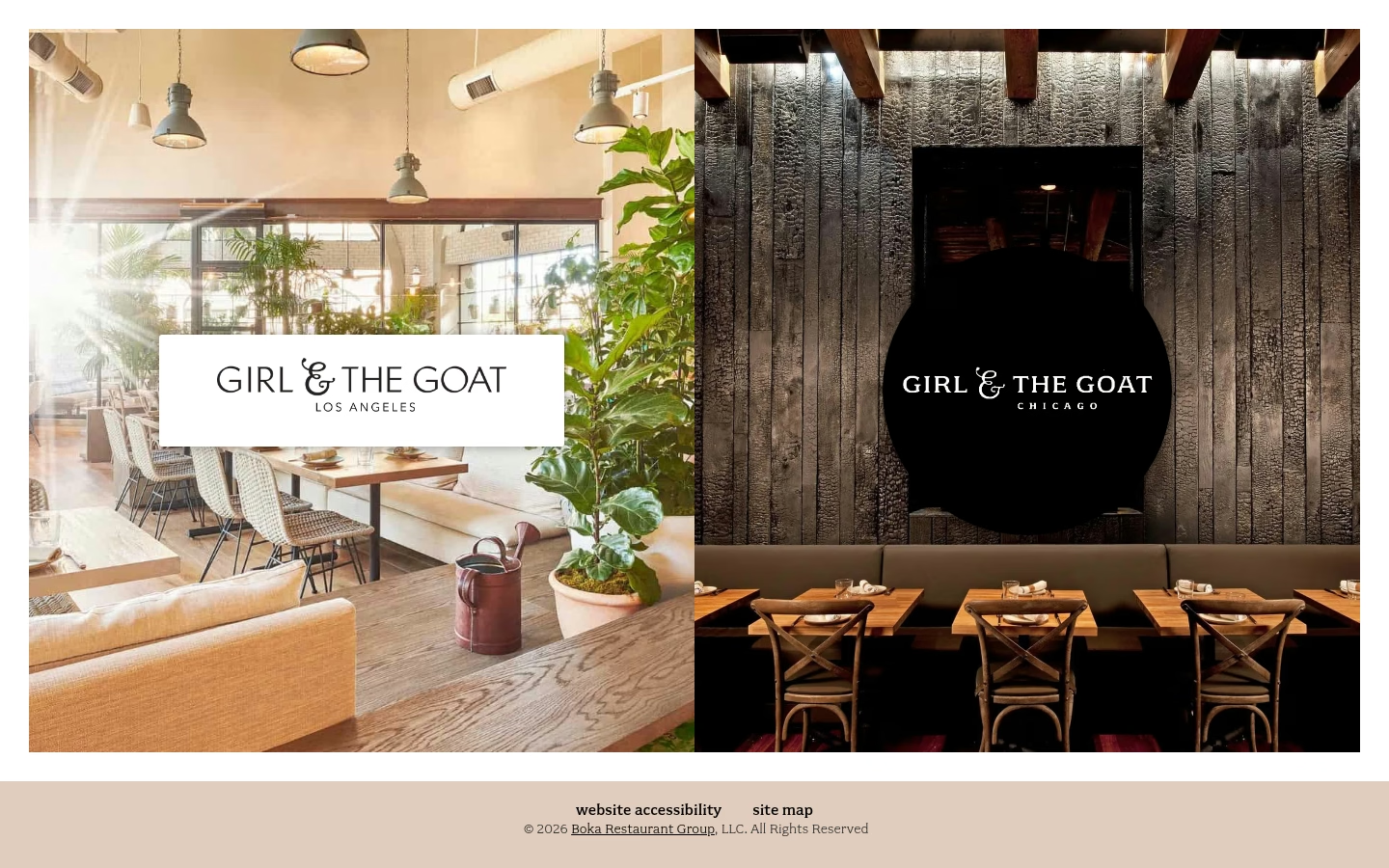
Chef Stephanie Izard's Girl & the Goat website is built around personality and culinary identity—not generic restaurant copy. The site leads with the chef's story, the restaurant's philosophy, and the kind of atmosphere that can't be replicated anywhere else. Every element communicates that this is a destination dining experience, not just a place to eat.
The site features a clear reservation flow, menus that communicate the restaurant's creative approach, and photography that makes the food and space feel like an experience worth planning around. The design is warm and editorial, matching the restaurant's celebrated Chicago atmosphere.
Why this works: Girl & the Goat built a website that sells the experience before it sells the meal. Diners aren't just making a reservation—they're choosing an evening. By leading with the chef's personality, the restaurant's story, and photography that captures the atmosphere, the site converts visitors who are deciding between multiple options for a special night out.
Sweet Jesus built one of the most distinctive visual identities in the food and beverage industry, and their website delivers that identity at full volume. The site is dark, bold, irreverent, and immediately recognizable—a perfect extension of a brand that turned soft-serve ice cream into a cultural moment.
The site leads with product imagery that looks more like high-fashion photography than dessert marketing. The brand's voice—playful, provocative, and unapologetically itself—runs through every line of copy. Location and menu information is easy to find, but the primary job of the homepage is to make visitors feel the brand before they read anything.
Why this works: Sweet Jesus understood that for brands in the experience economy, the website's job is to make people feel something—not just inform them. Their bold visual identity and provocative tone create a brand that people want to be associated with, which drives social sharing, word-of-mouth, and lines around the block.

Gramercy Tavern's website reflects the warmth and timelessness that has made it one of New York's most beloved restaurants for decades. The site leads with rich, natural photography that captures the seasonal ingredients, the handcrafted atmosphere, and the kind of hospitality that turns a dinner into a memory.
The design is unhurried and elegant—deliberately paced to match the experience guests have when they walk through the door. Reservation links are clear and prominently placed, but the site never feels like it's rushing the visitor. The menu and the story behind it are given space to breathe and communicate their value.
Why this works: Gramercy Tavern's website works because it matches the experience it's selling. A restaurant that has built its reputation on warmth, craftsmanship, and seasonal hospitality can't present itself through a slick, fast-moving digital experience without creating dissonance. Their site feels like walking through the door—and that coherence builds confidence in what guests are about to experience.

Salt Life Food Shack's website leads with coastal lifestyle—sun, surf, and the kind of laid-back dining experience that draws beach crowds back again and again. The site's photography is sun-drenched and casual, matching the atmosphere of their oceanfront locations perfectly.
The menu is clearly presented, location pages cover each restaurant, and the overall tone is fun and approachable—exactly what the brand delivers in person. The site doesn't overcomplicate things: it communicates the vibe, makes the menu easy to find, and gets out of the way so visitors can decide to come in.
Why this works: Salt Life Food Shack demonstrates that restaurant websites don't need to be complex to be effective. Their brand is clear, their audience is defined, and the website delivers what that audience expects: a glimpse of the coastal dining experience they're coming for. Simplicity and authenticity convert better than complexity in lifestyle dining.

See your finished website before you pay a dime. We design it first, you review and approve, then we deploy in 2–3 days.
Costs vary significantly depending on your approach. DIY website builders like Squarespace can cost $15–$50 per month and work reasonably well for simple restaurant sites—but they typically lack the local SEO structure and conversion optimization that drive real reservations and orders. Professional agency-built restaurant websites typically range from $2,000 to $15,000+ depending on complexity, features like online ordering integration, and content needs. At ESPLocal, we design your website before requesting payment so you can see exactly what you're getting before committing.
Template-based websites can be live in a few days but often look generic and don't rank well in local search. Custom-designed restaurant websites from agencies typically take 4–8 weeks. ESPLocal designs your site upfront and deploys within 2–3 days of approval—giving you a professional, conversion-optimized website without waiting two months.
Absolutely. Third-party platforms are useful for discovery, but they're expensive and you don't control them. DoorDash takes 15–30% of every order placed through their platform. Yelp controls which reviews appear. Competitors show up next to you on every listing. Your website is the only channel where customers can order directly from you without a commission cut, make reservations that go straight to your team, and see your brand exactly the way you want to present it.
At minimum, your restaurant website needs a homepage, a full menu page with current prices, a reservations page or integrated booking widget, a contact page with hours and address, an about page that tells your story, and a gallery showcasing your food and atmosphere. If you have multiple locations, each deserves its own page. A private events or catering page is valuable if you offer those services.
It's critical. Over 80% of restaurant searches happen on mobile devices—often from someone who's hungry and making a decision right now. If your website doesn't load quickly, display your menu clearly on a phone screen, or make reservation booking effortless on mobile, you lose those customers to competitors whose sites do. Mobile performance is the single highest-impact technical investment a restaurant website can make.
Yes. A well-structured restaurant website with proper schema markup—which tells Google your cuisine type, hours, price range, and location—combined with local SEO content, fast loading speeds, and a well-maintained Google Business Profile significantly improves your chances of appearing in Google's local pack. The restaurants that dominate those three top local results almost always have the most complete and well-optimized web presence.
Treating the website as a one-time project. Restaurants change their menus seasonally, adjust their hours, run special events, and update their offerings constantly—but many websites sit untouched for years. An outdated menu, wrong hours, or a seasonal event from two years ago signals to both Google and potential diners that the restaurant isn't paying attention. Your website needs to be treated like a living part of your operation, not a marketing checkbox.
Yes, always. Your menu and prices are the most-visited section of any restaurant website. Diners who can't find your menu or your prices will either move on to a competitor or arrive with incorrect expectations. Hiding prices because they're high doesn't work—it just creates friction and erodes trust. Showing a full, current, clearly priced menu builds confidence and significantly increases the likelihood that a website visitor becomes a paying customer.
ESPLocal has helped 100s of plumbing companies rank higher, generate more qualified leads, and grow revenue through structured, proven local SEO.

Premium websites and structured local SEO for serious brick-and-mortar businesses.
© 2026 ESPLocal. All rights reserved.

